• ALL BOOKS
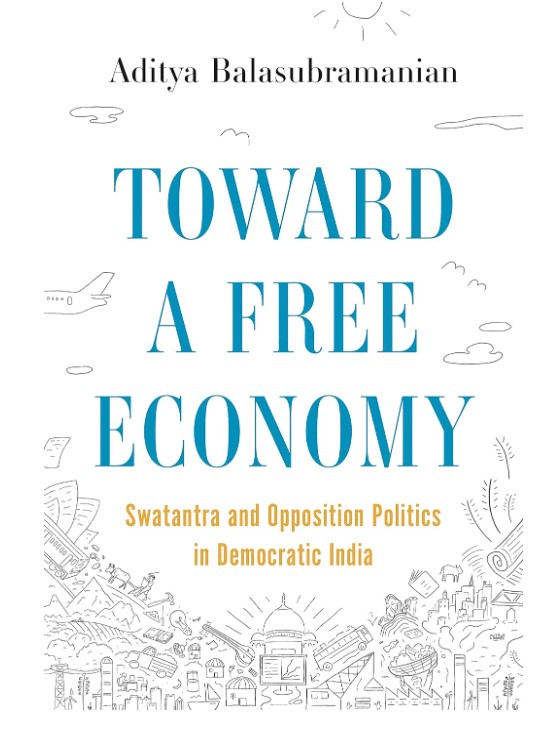
  • Toward a Free Economy: Swatantra and Opposition Politics in Democratic India

Toward a Free Economy: Swatantra and Opposition Politics in Democratic India

  • PRODUCT CODE : 9780691256573
  • CATEGORY: Non Fiction
  • ISBN-13:
  • PAGES: 323
  • DIMENSIONS:
  • LANGUAGE: English

Toward a Free Economy: Swatantra and Opposition Politics in Democratic India

Rs. 799.00

Publisher :Princeton
  • Non Fiction
  • English
  • 323 PAGES

The unknown history of economic conservatism in India after independence


Neoliberalism is routinely characterized as an antidemocratic, expert-driven project aimed at insulating markets from politics, devised in the North Atlantic and projected on the rest of the world. Revising this understanding, 
Toward a Free Economy shows how economic conservatism emerged and was disseminated in a postcolonial society consistent with the logic of democracy.

Twelve years after the British left India, a Swatantra (“Freedom”) Party came to life. It encouraged Indians to break with the Indian National Congress Party, which spearheaded the anticolonial nationalist movement and now dominated Indian democracy. Rejecting Congress’s heavy-industrial developmental state and the accompanying rhetoric of socialism, Swatantra promised “free economy” through its project of opposition politics.

As it circulated across various genres, “free economy” took on meanings that varied by region and language, caste and class, and won diverse advocates. These articulations, informed by but distinct from neoliberalism, came chiefly from communities in southern and western India as they embraced new forms of entrepreneurial activity. At their core, they connoted anticommunism, unfettered private economic activity, decentralized development, and the defense of private property.

Opposition politics encompassed ideas and practice. Swatantra’s leaders imagined a conservative alternative to a progressive dominant party in a two-party system. They communicated ideas and mobilized people around such issues as inflation, taxation, and property. And they made creative use of India’s institutions to bring checks and balances to the political system.

 

The unknown history of economic conservatism in India after independence Neoliberalism is routinely characterized as an antidemocratic, expert-driven project aimed at insulating markets from politics, devised in the North Atlantic and projected on the rest of the world.
evising this understanding, Toward a Free Economy shows how economic conservatism emerged and was disseminated in a postcolonial society consistent with the logic of democracy. Twelve years after the British left India, a Swatantra (“Freedom”) Party came to life. It encouraged Indians to break with the Indian National Congress Party, which spearheaded the anticolonial nationalist movement and now dominated Indian democracy. Rejecting Congress’s heavy-industrial developmental state and the accompanying rhetoric of socialism, Swatantra promised “free economy” through its project of opposition politics. As it circulated across various genres, “free economy” took on meanings that varied by region and language, caste and class, and won diverse advocates. These articulations, informed by but distinct from neoliberalism, came chiefly from communities in southern and western India as they embraced new forms of entrepreneurial activity. At their core, they connoted anticommunism, unfettered private economic activity, decentralized development, and the defense of private property. Opposition politics encompassed ideas and practice. Swatantra’s leaders imagined a conservative alternative to a progressive dominant party in a two-party system. They communicated ideas and mobilized people around such issues as inflation, taxation, and property. And they made creative use of India’s institutions to bring checks and balances to the political

Read More
  • PRODUCT CODE : 9780691256573
  • CATEGORY: Non Fiction
  • ISBN-13: 9780691256573
  • PAGES: 323
  • DIMENSIONS:
  • LANGUAGE: English

Other Books From The Same Category

Steal Like An Artist: 10 Things Nobody Told You About Being Creative
steal like an artist: 10 ... AUTHOR'S NAME:austin kleon

424.00

BEST OF THIRIKKURAL WISDOM TO ENRICH YOURSELF AND HUMANITY
best of thirikkural wisdo... AUTHOR'S NAME:r poornalingam

336.00

Working backwards
working backwards AUTHOR'S NAME:colin bryar and bill carr

509.00

The Constitution of India Freedom , justice and equality for every Indian
the constitution of india... AUTHOR'S NAME:

506.00

Stationery Books