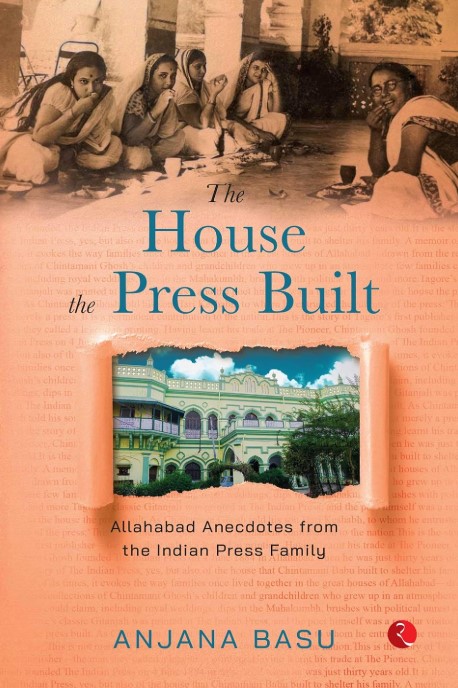
This is the story of Tagore's first publisher - the man they called a legend in printing . Having learnt his trade at The Poineer , Chintamoni Ghosh founded the Indian Press on 4 June 1884 in Allahabad when he was just thirty years old.
It is the story of the Indian Press , yes , but also of the house that Chintamoni Babu built to shelter his family. A memoir of its times , it evokes the way families once lived together in the great houses of Allahabad - drawn from the recollections of Chintamoni Ghosh's children and grandchildren who grew up in an atmosphere few familes could claim to have , incliuding royal weddings , dips in the Mahakumbh , brushes with political Unrest and more.
Tagore's Classic Gitanjali was printed at the Indian Press , and the poet himself was a regular visitor to the house the press built. As Chintamoni Ghosh told his son Hari Keshav , to whom he entrusted the running of the press :
This is not merely a press. It is a permanent contribution to the nation.
This is the story of Tagore's first publisher - the man they called a legend in printing . Having learnt his trade at The Poineer , Chintamoni Ghosh founded the Indian Press on 4 June 1884 in Allahabad when he was just thirty years old.
It is the story of the
dian Press , yes , but also of the house that Chintamoni Babu built to shelter his family. A memoir of its times , it evokes the way families once lived together in the great houses of Allahabad - drawn from the recollections of Chintamoni Ghosh's children and grandchildren who grew up in an atmosphere few familes could claim to have , incliuding royal weddings , dips in the Mahakumbh , brushes with political Unrest and more.
Tagore's Classic Gitanjali was printed at the Indian Press , and the poet himself was a regular visitor to the house the press built. As Chintamoni Ghosh told his son Hari Keshav , to whom he entrusted the running of the press :
This is not merely a press. It is a permanent contribution to the
Read More











.jpg)








.jpg)












































































































































































































































.jpg)










.webp)









.jpg)